


Key words: ADME, In Vitro Metabolism, Metabolic Stability, Microsomal Stability, Hepatocyte Stability, Feline Liver Microsome, Cat Liver Microsome, Feline Liver S9 Fraction, Suspension Feline Hepatocytes, Plateable Feline Hepatocytes, Feline Plasma, Feline Serum, Feline PBMC, Cat PBMC
1 IPHASE Products
|
Product Name |
Specification |
|
0.5mL,20mg/mL |
|
|
IPHASE Feline Liver Microsomes,Female |
0.5mL,20mg/mL |
|
0.5mL,20mg/mL |
|
|
0.5mL,20mg/mL |
|
|
5million |
|
|
5million |
|
|
5mL |
|
|
5mL |
|
|
10mL |
|
|
IPHASE Feline Plasma,Mixed Gender,Heparin Sodium |
10mL |
|
5million |
2 Feline/Cat
Feline/cats belong to the Carnivorous order of the Mammalia class and the Felidae genus. They were first used in scientific research experiments in the late 19th century and have now been widely used in scientific research such as biomedicine. Feline/cats have made significant contributions in the development of life sciences and medicine over the past century. So far, out of the 180 Nobel laureates in Physiology or Medicine who have obtained results based on animal research, 19 have used cats as experimental animals.
Cats have well-developed nervous, circulatory, and muscular systems, and their neural reflex function is similar to that of humans. The experimental results are closer to those of humans than rodents, making them particularly suitable for observing various external stimulus responses in experiments. In addition, as a medium-sized experimental animal, cats are larger in size compared to mice, making them easier to operate and observe in experiments. Therefore, cats are widely used in biomedical research fields such as physiology, pharmacology, and disease modeling.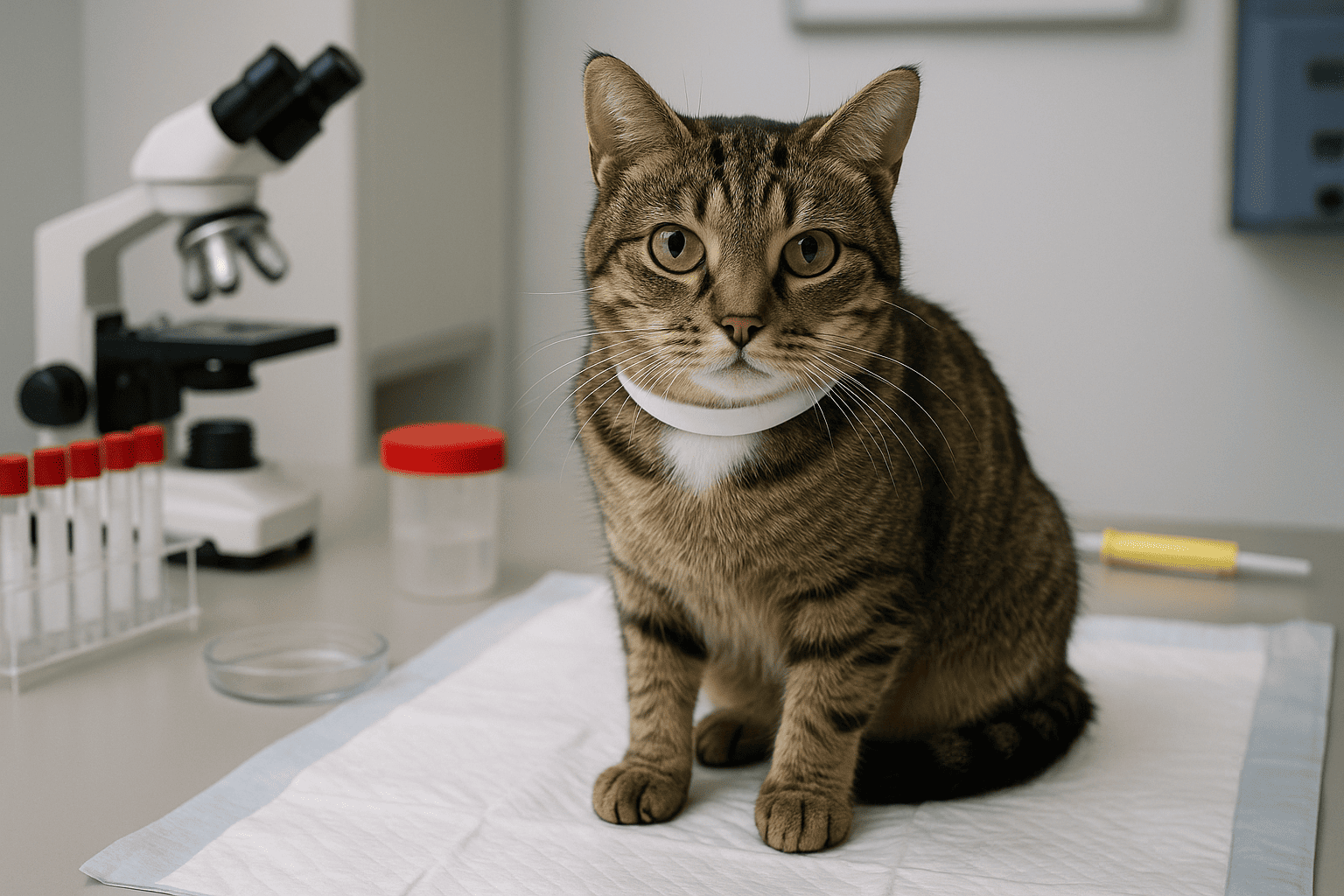
3 Marketing and Research Status of Feline Animal Remedy
The feline animal remedy market is currently experiencing significant growth, with a notable increase in feline veterinary visits and revenue, defying broader industry trends. This growth is driven by rising cat ownership, especially in urban areas, and increased awareness of feline-specific health needs. Research in feline medicine, while historically lagging behind canine studies, is gaining momentum with new funding and a focus on areas like genetics, chronic kidney disease, and novel immunotherapies. However, challenges remain, including species-specific metabolic differences, the need for more targeted therapies, and ensuring pet owner compliance with treatments.
The preclinical development research of veterinary drugs also requires relevant tests such as ADME, drug stability, and drug toxicology. Therefore, for the development of feline veterinary drugs, we can provide a series of biological material products such as feline liver microsomes, feline liver S9 fraction, suspended feline liver cells, adherent/plateable feline liver cells, feline serum, and feline plasma.
4 Primary Hepatocytes
The liver is an important organ for drug metabolism, and ADME in vitro metabolism models are often based on the liver. Among them, primary hepatocytes, as an in vitro model of the liver, have good reproducibility in vitro experiments and basically maintain the metabolic function of the liver, especially retaining enzyme levels consistent with those in vivo, becoming the "gold standard" for in vitro drug testing and widely used in drug metabolism and toxicology research.
In metabolic stability and drug safety of ADME in vitro metabolism studies, hepatocyte stability research experiments can be selected. The hepatocyte stability test is an in vitro assay that evaluates the metabolic stability of candidate drugs by measuring the rate at which they are metabolized by liver cells or liver cells.
5 Plateable Feline Hepatocytes
The plateable feline hepatocytes (adherent feline hepatocytes) not only serve to validate human drugs, but also play an important role in the study of veterinary drugs. Compared to human medicine, the research and development of veterinary drugs are relatively lagging behind, but the market size of veterinary drugs has been increasing year by year. Using plateable feline hepatocytes as carriers for in vitro drug metabolism and toxicity studies, facilitating the development of veterinary drugs such as poultry, livestock, and mammals, and clarifying the role analysis of drugs in animal disease prevention and treatment.
6 Suspension Feline Hepatocytes
Co incubation of nascent compounds with suspension feline hepatocytes not only allows for the study of the metabolic stability of compounds in hepatocytes, but also yields relatively high levels of high-purity metabolites. This has significant advantages in studying drug biotransformation characteristics and identifying potential metabolites of drugs.
7 Feline Liver Microsome (Cat Liver Microsome) and Microsomal Stability
Liver Micresomes (cat liver microsomes), compare to liver cell, are simple to operate,reasonably priced and easy to store. They have been widely used in the initial screening of drug metabolism. As the main carrier of phase I metabolic enzymes, liver microsome are widely used for in-vitro metabolic stability, metabolic phenotype, enzyme inhibition and metabolite identification experiments. In metabolic stability studies, it can also be selected for microsomal stability research experiments.
8 Feline Liver Homogenate
Liver tissue homogenate (liver homogenate) is obtained by crushing and homogenizing liver tissue, which is convenient for acquisition, store and transportation. It contains various drug metabolizing enzymes in liver tissue.
9 Feline Liver S9 Fraction
Feline liver S9 fraction is a suspension solution containing essential metabolic components and possessing complete metabolic functions after removing homogenate sediment from liver tissue. Compared to microsomes and cytoplasm, feline liver S9 fraction contains the complete activity of phase I and phase II metabolic enzymes, making it more suitable for studying the metabolic profile of drug.
10 Feline Plasma and Feline Serum
Feline biological matrices, specifically plasma/serum and peripheral blood mononuclear cells (PBMCs), are invaluable tools in pharmaceutical discovery and development, offering critical insights into drug behavior and biological responses. Their use is essential for advancing veterinary medicine and can also provide comparative data relevant to human health.
Feline plasma and feline serum are crucial for pharmacokinetic (PK) and pharmacodynamic (PD) studies, enabling researchers to understand how drugs are absorbed, distributed, metabolized, and excreted in cats. These matrices are also vital for identifying and validating biomarkers of disease progression or drug efficacy, aiding in the development of targeted therapies. Furthermore, analyzing drug concentrations and metabolite profiles in feline plasma/ feline serum helps assess drug safety and optimize dosing regimens, ensuring effective and well-tolerated treatments for feline patients.
11 Feline Peripheral Blood Mononuclear Cells (PBMCs, Cat PBMC) in Pharma Research
Feline PBMCs (cat PBMC), comprising lymphocytes, monocytes, and dendritic cells, are indispensable for immunological studies in drug development. These cells allow for in vitro assessment of drug effects on immune responses, such as cytokine production, cell proliferation, and immune cell activation, which is critical for developing vaccines and immunomodulatory drugs. Studying feline PBMCs (cat PBMCs) can also provide valuable models for understanding species-specific immune mechanisms and disease pathogenesis, contributing to both veterinary and comparative human medicine.
Post time: 2025-06-05 13:23:52